
1. Overview of terraced rice fields in Vietnam
Vietnam is a country famous for its wet rice civilization that was formed and developed over thousands of years. In particular, Vietnamese use various farming techniques in different areas based on the local natural conditions. If the South has endless rice fields stretching across the vast Mekong Delta, then in the Northern mountainous areas, rice is cultivated by people on the mountain slopes and is called “terraced fields”. The terraced fields located on the majestic mountain slopes not only create a magnificent landscape, but also demonstrate the will of the Vietnamese people to conquer nature. Therefore, terraced fields have become one of the typical images associated with Vietnamese tourism, creating attraction for tourists from all over the world. Below are the 4 most beautiful places to admire beautiful terraced rice fields in Vietnam
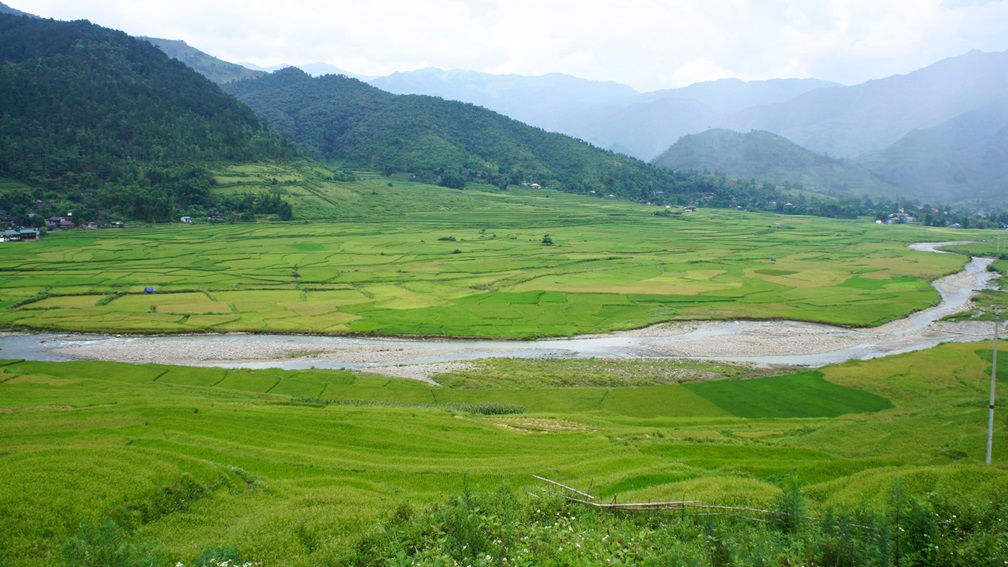
Yen Bai – the province with the largest terraced field area in Vietnam
2. Top 4 most beautiful places to admire terraced rice fields in Vietnam
- Mu Cang Chai (Yen Bai Province)
Don’t miss Mu Cang Chai if you wish to take in the breathtaking beauty of terraced rice fields in Vietnam. Mu Cang Chai is a famous landmark on the tourist map of Vietnam. Situated in the majestic Northwest region (Yen Bai province) around 300 km from Hanoi, this location is ranked second among the largest terraced field systems worldwide, and is renowned for having the largest terraced field systems in Vietnam.
You will be astounded by Mu Cang Chai’s terraced field systems, which span up to 2,200 hectares. Of these, the Vietnamese government has designated 330 hectares in three communes—La Pan Tan, Che Cu Nha, and De Xu Phinh—as national landscapes of high significance. These areas include a variety of shapes, including trapezoid, raspberry, and spiral. September through October are the best months to experience this land’s magnificence since the rice fields are at their most ripe and golden. Still, Mu Cang Chai has its own special beauty throughout other times of the year.

La Pan Tan raspberry hill

Lim Mong Valley
- Sa Pa (Lao Cai Province)
When it comes to tourism in Vietnam, Sapa is undoubtedly a place where foreign visitors no longer find it too unusual. In the province of Lao Cai, Sapa is situated more than 300 kilometers northwest of Hanoi. This land is renowned not only for the magnificent Hoang Lien Son mountain range, which is home to the distinctive cultural beauty of ethnic minority communities, but also for its lush terraced fields, which are situated between 1500 and 1800 meters above sea level, adding to its inherent splendor and majesty.
Sapa’s terraced fields are concentrated mainly in Ta Van, Lao Chai, Ta Phin communes with a total area of about 1500 hectares. Unlike Mu Cang Chai, terraced fields in Sapa are mainly trapezoidal in shape, raised and vertical. The most ideal time to explore the beauty of this land is September – October (golden season), but if you travel in May – August (water season, also known as the rainy season) you will admire the very different beauty of terraced rice fields in Vietnam in general and Sapa in particular.
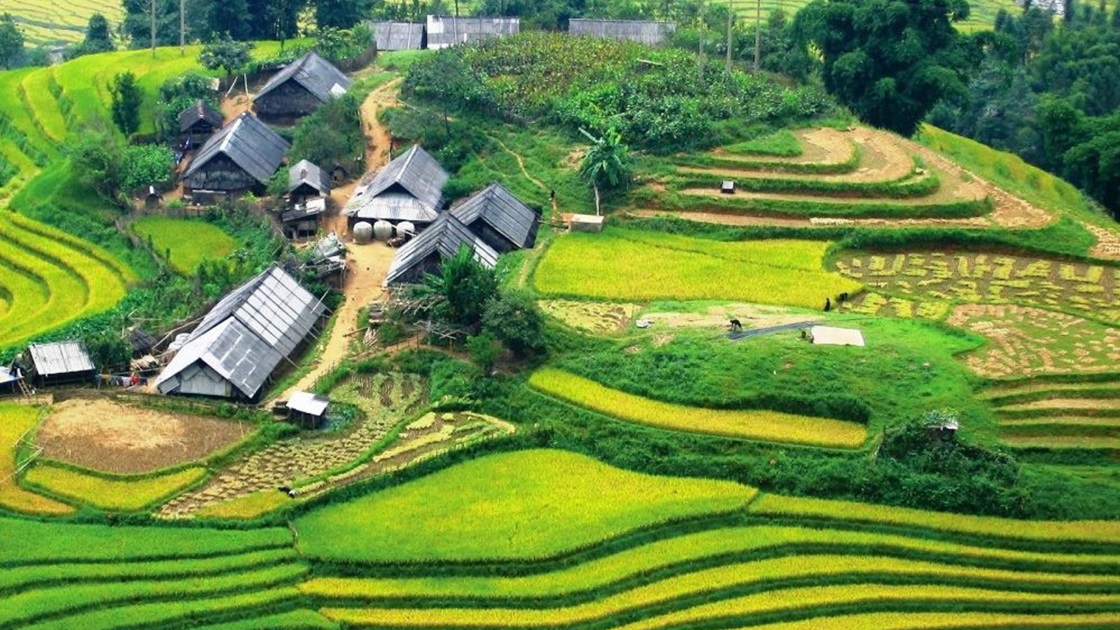
Sapa (Source: Internet)
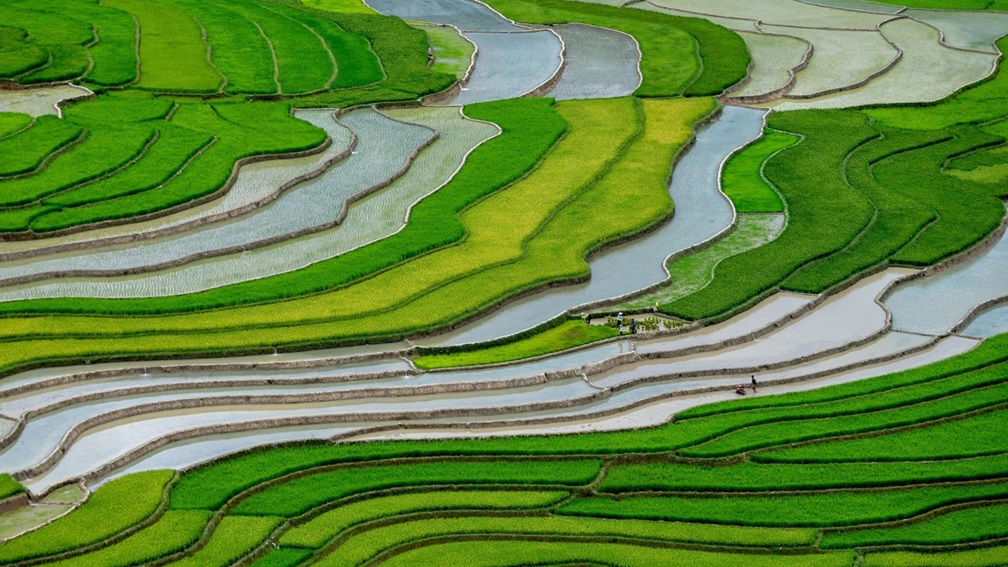
Sapa Terraced Rice Field in the water pouring season (Source: Internet)
- Y Ty (Lao Cai Province)
Y Ty, located in Bat Xat district – a border district in Lao Cai province, is still a little-known wild place in the Northwest region of Vietnam. Y Ty is situated in a somewhat remote area, roughly 70 kilometers from Sa Pa town and 370 kilometers from Hanoi. Located at an altitude of 2000m, with a scale of up to 5000 hectares, Y Ty terraced fields are surrounded by majestic high mountains, and nestled among beautiful ethnic minority villages.
The terraced fields in Y Ty are not as well-known as those in Mu Cang Chai or Sapa, but they nonetheless have a very distinct charm. Especially due to the high terrain, at many times of the year you will be immersed in the sea of floating clouds in this area. Besides, many terraced fields in Y Ty have been formed for hundreds of years by the diligent hands of the Ha Nhi, Mong, and Dao people. Therefore, not only can you admire the beauty of Vietnam’s terraced fields but also learn about the culture and life of the ethnic minority communities living here. The ideal time to admire Y Ty’s golden season is from September to October.

Y Ty Terraced Field
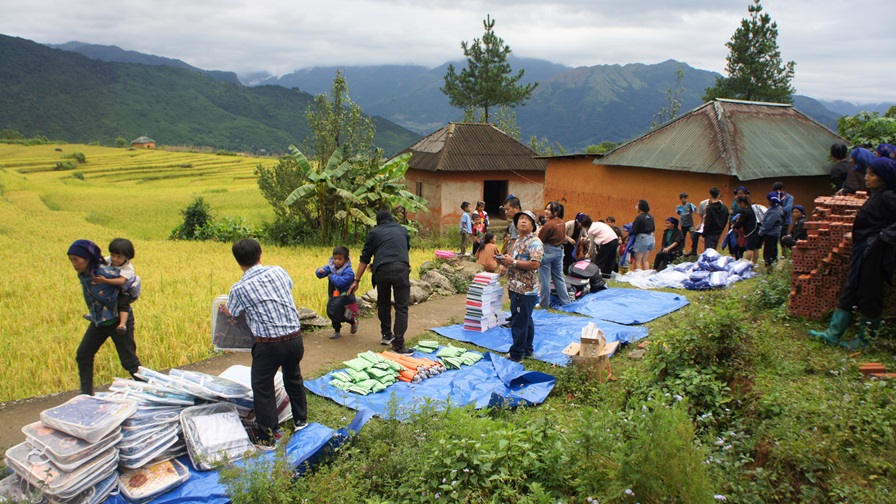
Choan Then Village
- Pu Luong (Thanh Hoa Province)
Pu Luong is the only representative on this list that is not in the Northwest region of Vietnam. Pu Luong is a place located in the west of Thanh Hoa province (on the territory of Ba Tuoc and Quan Hoa districts), nearly 150 km southwest of Hanoi. Spanning over 1000 hectares of area, Pu Luong is known as one of the largest terraced field systems in the North Central region, located between rolling mountains and primeval forests.
Coming to Pu Luong, you will admire the wild beauty of terraced rice fields in Vietnam on the mountain slopes, next to the streams that bring peaceful beauty. Pu Luong has 2 ripe rice seasons in the year, from May – June, from September – October. These are also considered two ideal times, attracting a large number of tourists to visit this land during the year.

Pu Luong (Source: Internet)
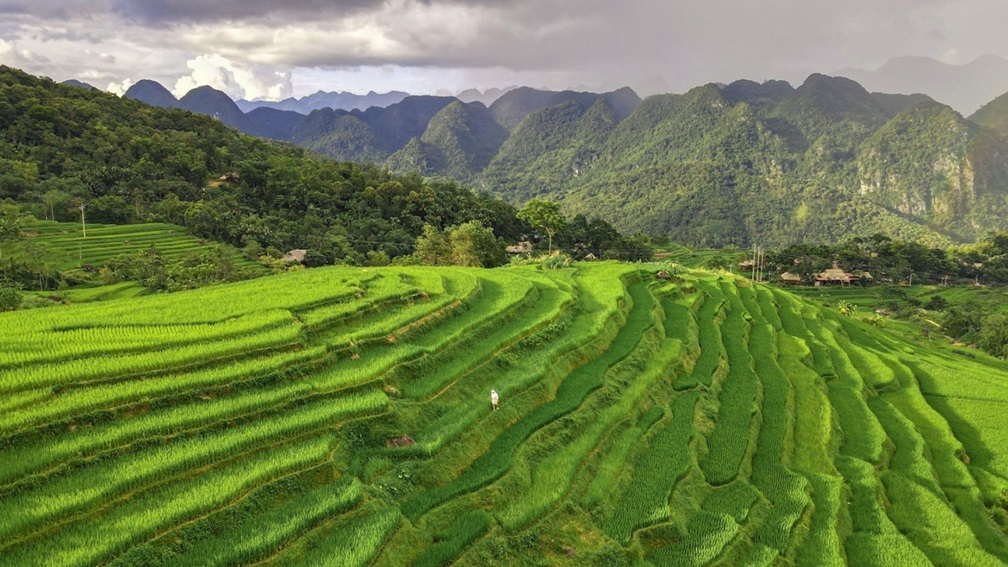
Pu Luong Terraced Rice Field (Source: Internet)
4. Tips for exploring terraced rice fields in Vietnam
- Choose the right time: The best time to see Vietnam’s terraced fields is during the ripe rice season, from September to October. At this time, the terraced fields are covered with a shiny yellow color, stretching far and wide, creating a beautiful scene.
- Prepare appropriate clothing and equipment: Terraced fields are often located in high areas, with steep terrain and cool climate. Visitors should prepare comfortable clothes and shoes suitable for the weather. In addition, visitors should also bring hats, hats, sunscreen, drinking water and other necessary items.
- Respect local culture: Terraced fields are the property of local people. Visitors need to respect their property rights and culture. When visiting terraced fields, visitors should not trespass on the growing area, destroy the landscape and affect people’s lives.
- Environmental protection: Terraced fields are a natural ecosystem that needs to be protected. Tourists should maintain general hygiene and not litter indiscriminately to protect the natural landscape.
